 Coming soon
Atlas Corporis
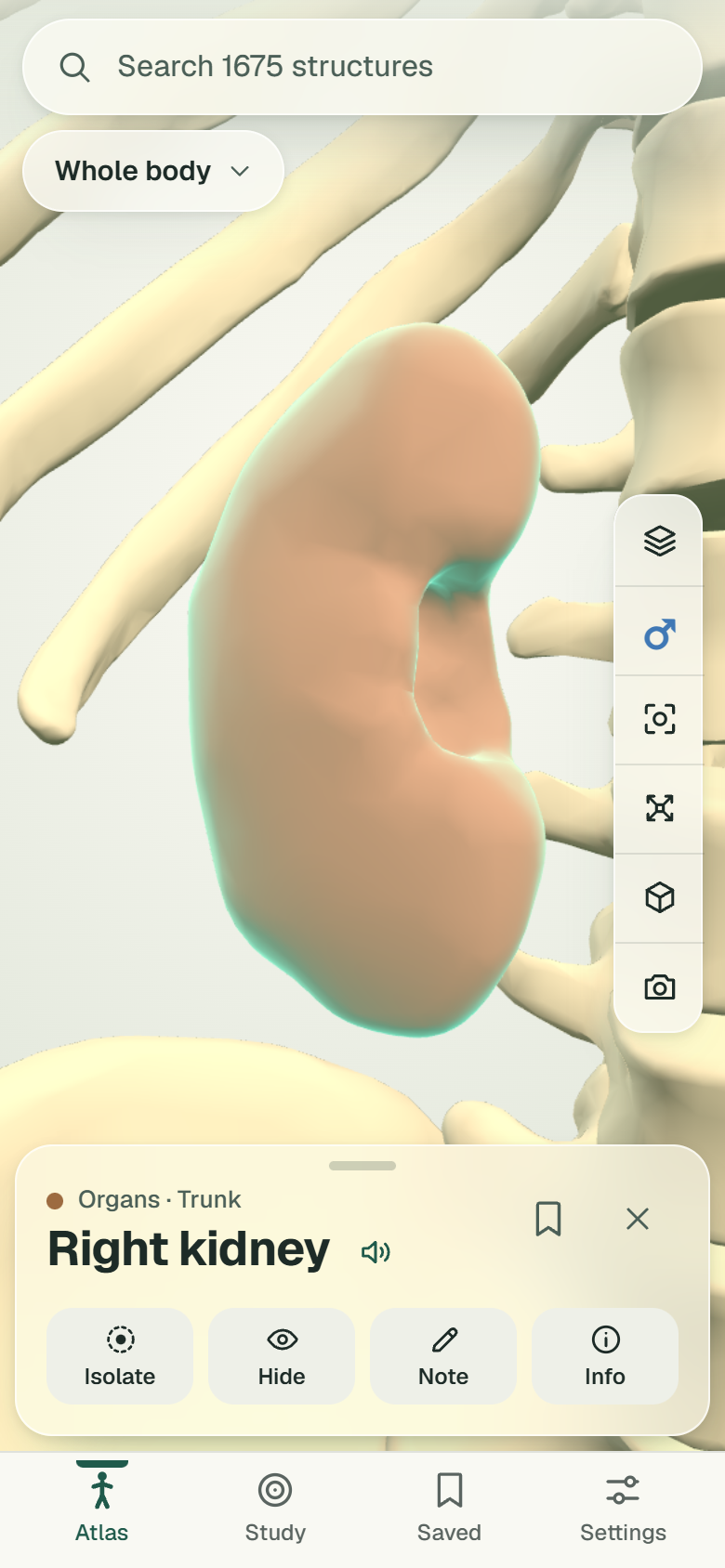
The human body, mapped.
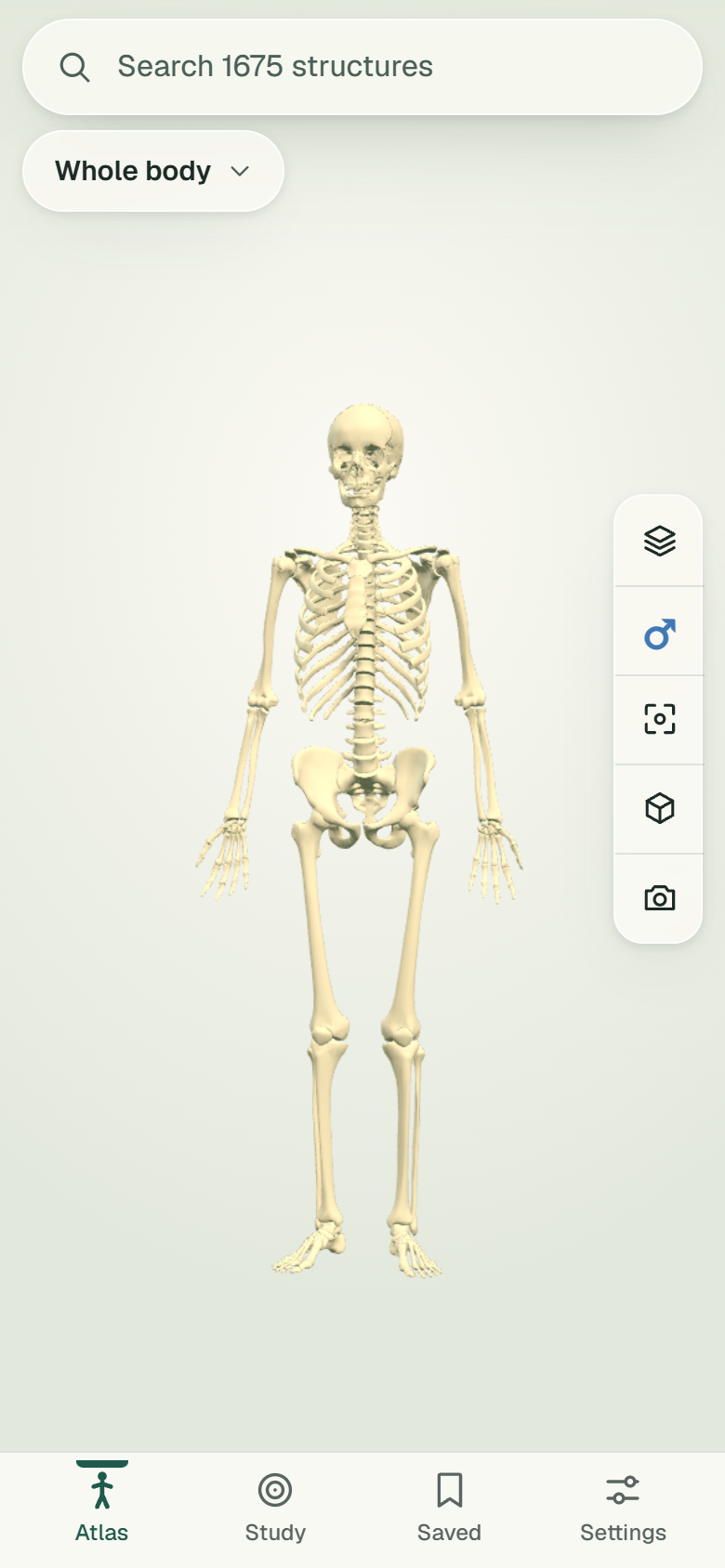
Explore 1,675 labelled structures in 3D, in English and Latin.
Inside the atlas
The human body, mapped.
Explore 1,675 labelled structures in 3D, in English and Latin.
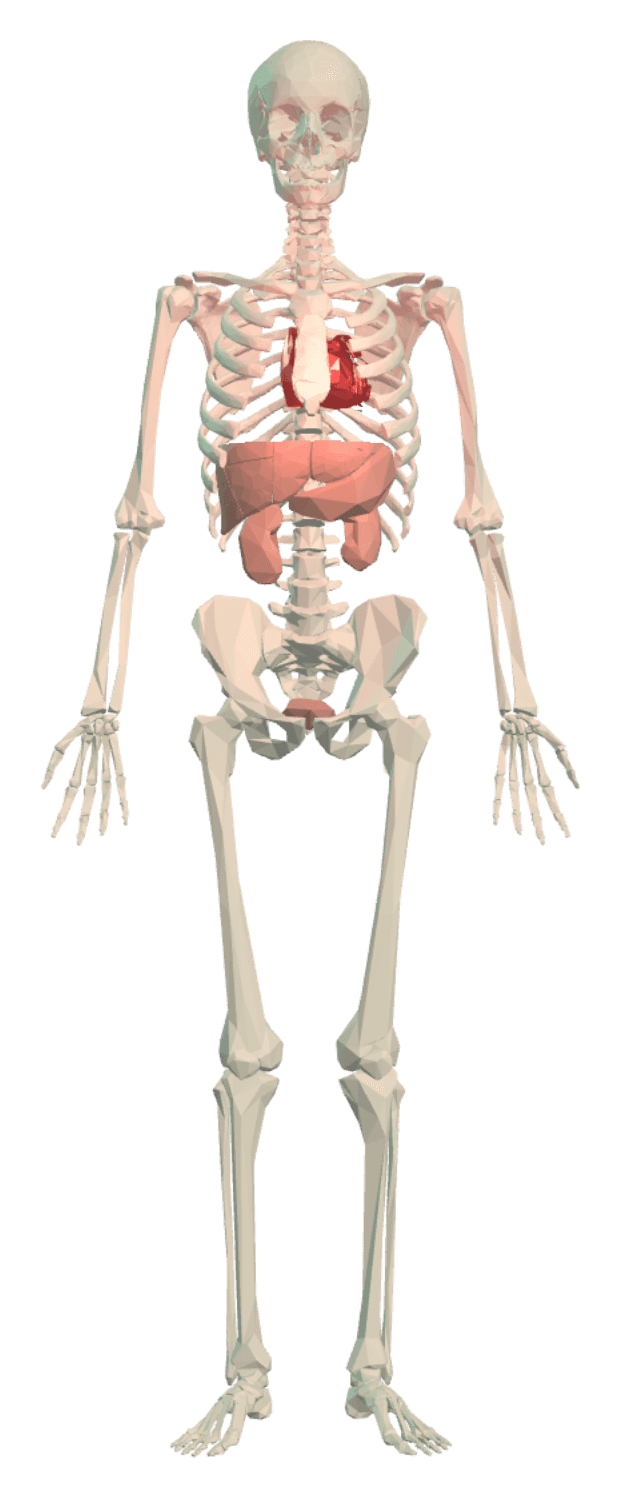
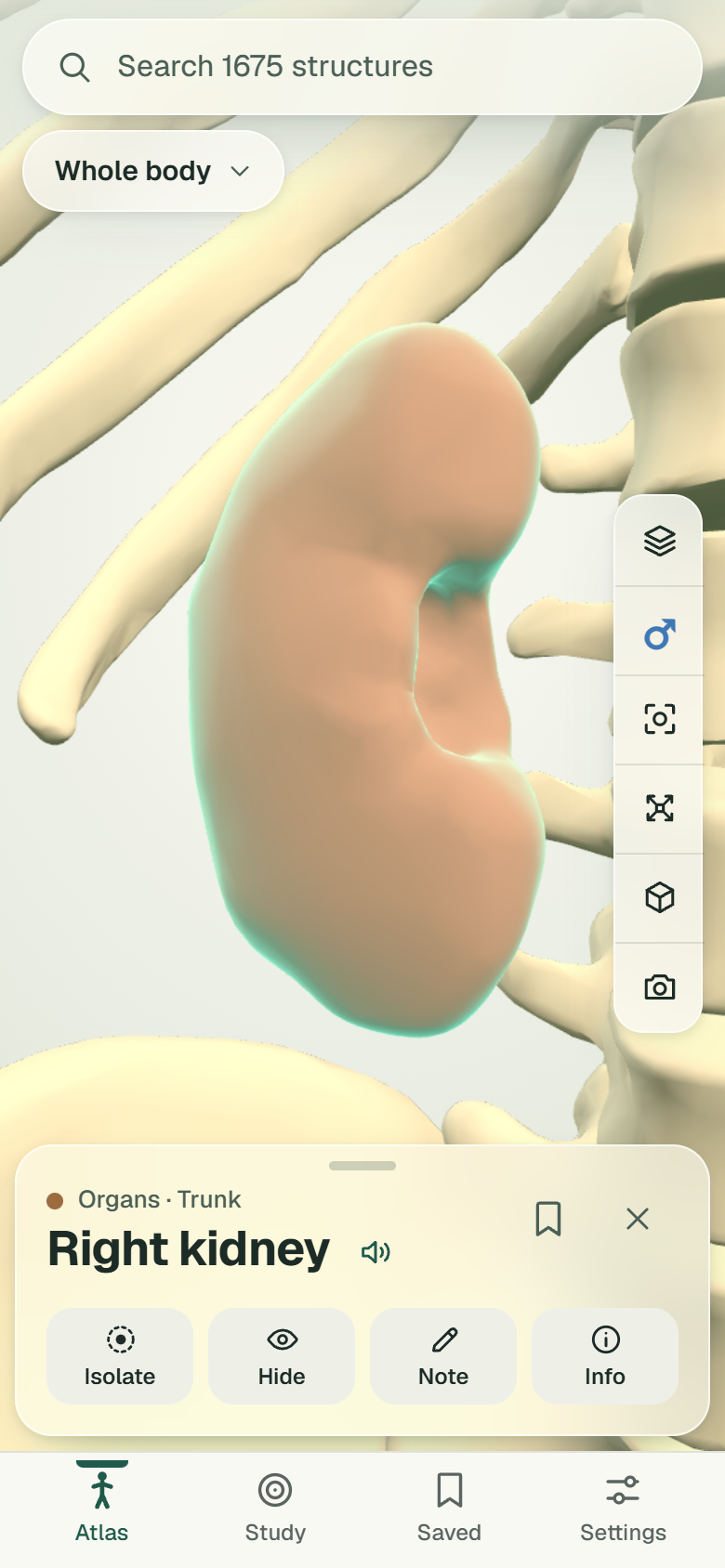
See it in layers.
Peel back skin, muscles and organs, all the way to the skeleton.
Every name, in English and Latin.
Most structures come with a recorded pronunciation, so you learn how to say them, not just spell them.
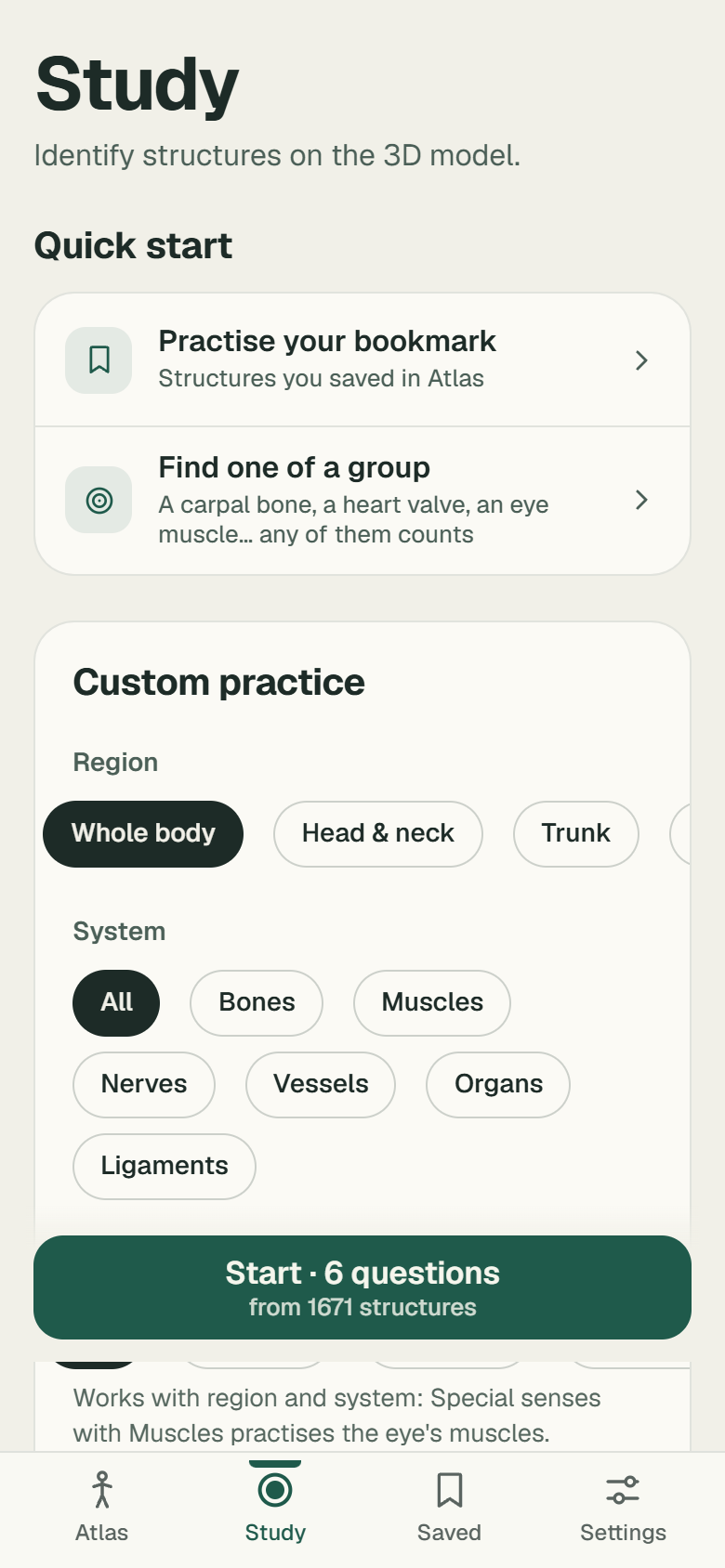
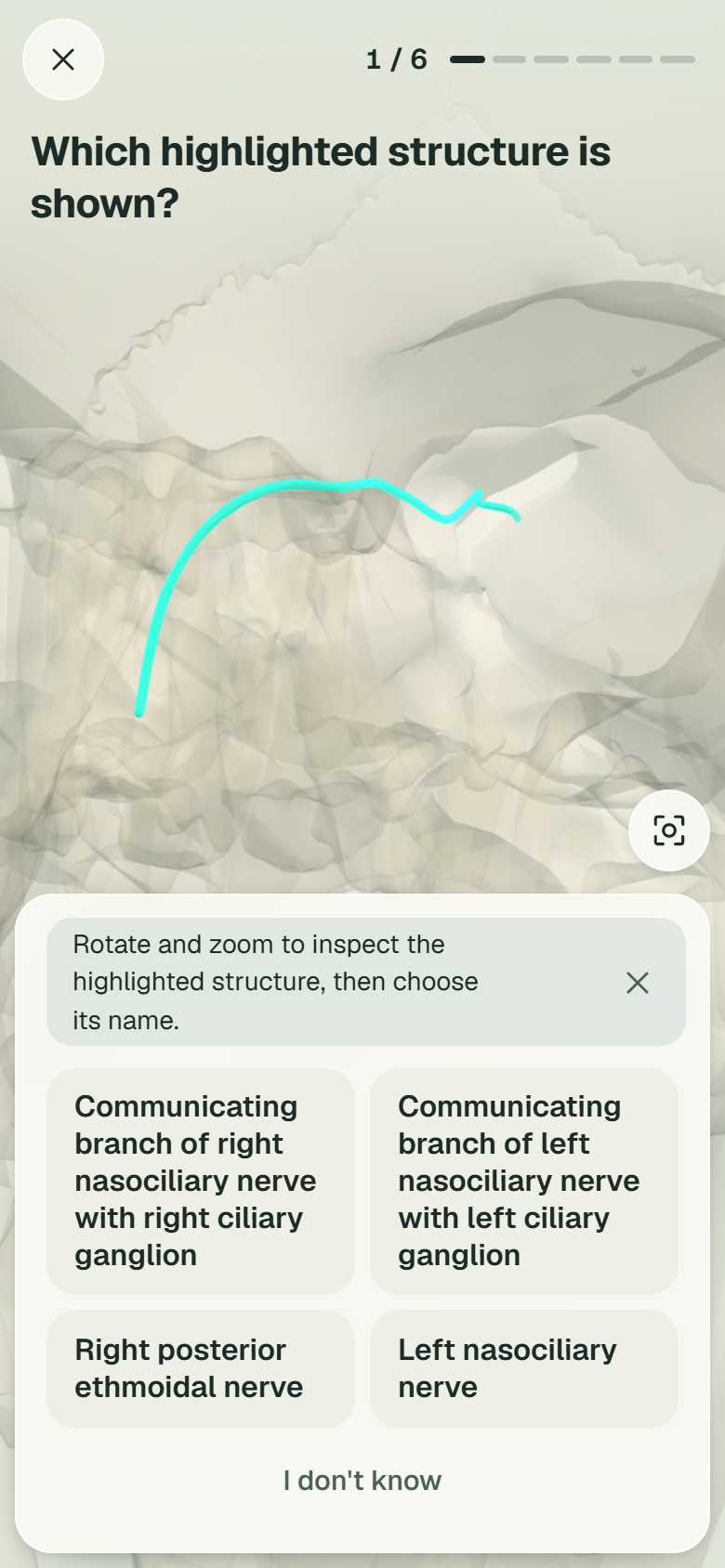
Test yourself.
Practise naming structures with quick quizzes, by region or body system.
Screenshots
Swipe to see more. Tap one to open it full size.
What you can do
See it in layers
Peel back skin, muscles and organs, all the way to the skeleton.
Cut through anything
Slice sections through the body and look inside.
Take it apart
Pull organs out of place to see what sits behind them.
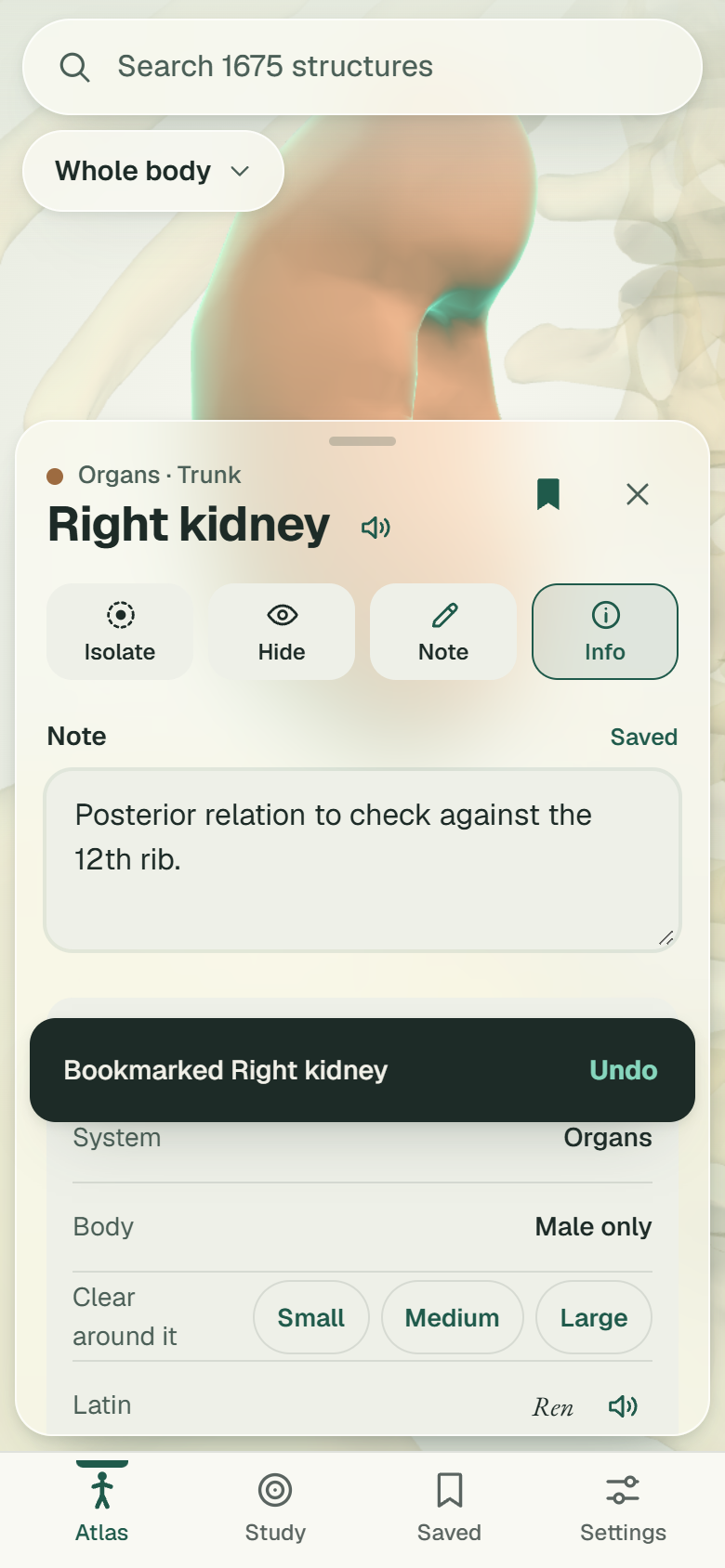
Every name, in English and Latin
Every structure has its English name, most with recorded pronunciation, and more than 900 show their Latin name too. In Latin, the kidney is Ren.
Make it yours
Bookmarks, notes and saved views, kept on your device.
Test yourself
Practise naming structures with quick quizzes, by region or body system.
Day or night
Light and dark modes, and it works offline once it has loaded.
- 1,675 structures
- 1,593 recorded pronunciations
- 914 Latin names
About Atlas Corporis
Atlas Corporis is a 3D atlas of the human body. Turn the model, tap any structure to see its English and Latin names and hear how to say them, then practise until the names stick.
Who it’s for
Built for high school and university students learning anatomy, and for anyone curious about how the body fits together.
Register for Atlas Corporis
Atlas Corporis is coming soon to Google Play and the App Store. Register and we’ll email you as soon as you can get it.
The form opens on Tally. You’ll get a thank-you email from Atlas Corporis right away.
Get it your way
- Google PlayComing soon
- App StoreComing soon
Questions
When can I get it?
Atlas Corporis is coming soon to Google Play and the App Store. Register and we'll email you as soon as it's out.
Which phones will it work on?
Android phones through Google Play, and iPhones and iPads through the App Store.
Does it work offline?
Yes. Once it has loaded, you can keep studying without a connection.
Is it accurate enough for exams?
It's a study aid, not a textbook. The models are simplified, it hasn't been medically reviewed, and it may contain errors. Always check against your course materials. See the disclaimer.
Where does the 3D data come from?
Mostly from BodyParts3D and the Human Reference Atlas, both openly licensed. The credits page lists every source and licence.
Who can register?
Anyone aged 13 or older. Registering takes a minute, and you get a thank-you email straight away.
The small print
Atlas Corporis is for learning. It is not medical advice and not a diagnostic tool.
- Version
- Beta
- Age
- 13+
Help with Atlas Corporis? Email [email protected].
More from Benji Oddballs Studios
 Live
Axiom Calculator
Every calculator you need, in one.
- Browser
 Play now
Naija Table
Pull up a chair.
- Browser
- APK